The period between signing a new client and delivering their first campaign is one of the most important in any agency relationship. Get email marketing client onboarding right and you set the tone for a long partnership. Get it wrong and you're playing catch-up from week one, chasing assets and explaining delays before you've sent a single email.
This guide breaks the first 24 hours into four stages: the welcome and kickoff, the asset collection process, the design brief, and the infrastructure setup. Each stage explains what to do, why it matters and how it prevents delays later on.
One point to be clear on before you start. The 24 hours covers your agency's side of onboarding: welcoming the client, collecting assets and access, briefing your designer or design partner, and setting up your systems. It doesn't mean the first campaign is designed and live within a day. Design delivery starts once you have a complete brief and follows the turnaround you've agreed. The timeline also depends on your client: if their brand guide or platform access takes three days to arrive, the rest of the process waits too. The aim is to make sure nothing on your side is the bottleneck.
Hour 1–2: Send the welcome and book the kickoff
As soon as the contract is signed, send a welcome message. It doesn't need to be long. A short, warm note that confirms next steps, who their main contact is and what will happen over the next few days is enough. It sets a professional tone immediately and reassures the client they've made the right decision.
In the same message, book a 30-minute kickoff call within the first 24 hours. The goal is to align before anyone starts work. Use the call to cover:
Goals: what the client wants email to achieve in the first 90 days, and how they'll judge success
First priorities: the first campaign or flow, and any fixed launch dates
Approvals: who signs off on designs and how quickly they usually respond
Communication: preferred channel, meeting rhythm and reporting expectations
Most importantly, agree when you'll receive their assets and access. Getting a named person and a date for this on the call does more to protect your timeline than any other single step, because the next stage depends on it.
Hour 2–4: Run a clear asset collection process
The biggest onboarding bottleneck is waiting for assets. A first campaign can't be designed without a logo file, and it can't be built without platform access. Get ahead of it by sending a clear asset request straight after the kickoff, while the conversation is fresh. You need:
Brand guide: fonts, colours, logos (ideally vector files) and tone of voice
Email platform access: a user invite to Klaviyo, Mailchimp or whichever platform they use, with the right permission level
Historical campaign data: past performance, best-performing emails and any flows already live, if available
Campaign calendar: upcoming launches, sales and any immediate deadlines
Product catalogue or website access: product images, pricing and, where possible, store admin access
Reference emails: designs they like, and any existing emails they want to move away from
Key contacts: who supplies assets, who approves designs and who to go to when something is urgent
The cleaner your request, the faster clients respond. A simple form or client onboarding checklist works better than a long email, because the client can see exactly what's missing and tick items off as they go. Send one request rather than drip-feeding questions over several days, and follow up on anything outstanding before the end of the day.
If an item is going to take time, such as a brand guide that's still being finalised, agree a workaround rather than waiting. You might start with the website's current styling and refine it once the guide arrives. With the essentials in hand, you can turn them into a brief.
Hour 4–8: Write the email design brief and send it to your design partner
With assets in hand, brief your designer or design partner straight away. Every hour a finished brief sits in your drafts is an hour added to the client's wait for first designs. If your team doesn't have a standard brief yet, start from our brief template with a brand sheet and per-email fields.
A good email design brief at this stage should cover:
The brand guide and any notes on how strictly it should be followed
The first campaign or flow to design, with copy if it's ready
The goal of each email: the one thing you want the reader to do
The deadline, including when the client needs to review it
Notes from the kickoff call, such as references the client liked or styles to avoid
The goal line matters more than it looks. Every Marz email starts with one question: what is the one thing we want the reader to do? A brief that answers it saves rounds of revisions later. Even a complete brief can leave room for misreads, so it's worth knowing why emails still miss the mark when the brief was good.
If you're working with Marz Media, you send requests through the Marz app, with the brand guide, brief and assets in one place. First drafts come back within 72 hours of a complete brief, and revisions come back the same day. That gives you a realistic date for the first review call, which you can share with the client before the day is out.
Hour 8–24: Set up the client infrastructure
While designs are in progress, set up the operational side. This is the work that keeps the second month running as smoothly as the first week, and it's much easier to do now than to retrofit once campaigns are flowing.
Create the client workspace in your project management tool, with the first campaigns already added as tasks
Set up a dedicated communication channel, such as a shared Slack channel or a single email thread, so decisions don't get lost
Document the brand guide and key contacts in one place the whole team can find
Schedule the first campaign review call, timed for when first drafts are due
Add the client's key dates, such as launches, sales and BFCM, to your agency calendar
Each item removes a small source of friction from your email marketing agency workflow. When a new team member joins the account, or the client asks a question at 6pm, everything they need is already in one place. For the next stage, our guide to building email flows faster covers how to keep production moving once onboarding is done.
The 24-hour mindset: why structured onboarding pays off
Speed matters at the start of a client relationship. It signals competence and shows the client you take their business seriously. But speed only lasts when a structured process supports it. A clear kickoff, one well-organised asset request, a complete brief and a ready-made workspace mean fewer surprises in the weeks that follow. The client knows what's happening and when, and your team isn't chasing the same information twice.
The other half is having design capacity that keeps pace. Your onboarding can be quick and organised, but if your designer is fully booked, the client still waits. A reliable white-label email design partner closes that gap. Alex, founder of POP, had his brands onboarded in 24 hours, and Trendfeed onboarded 10 clients at once while working with Marz.
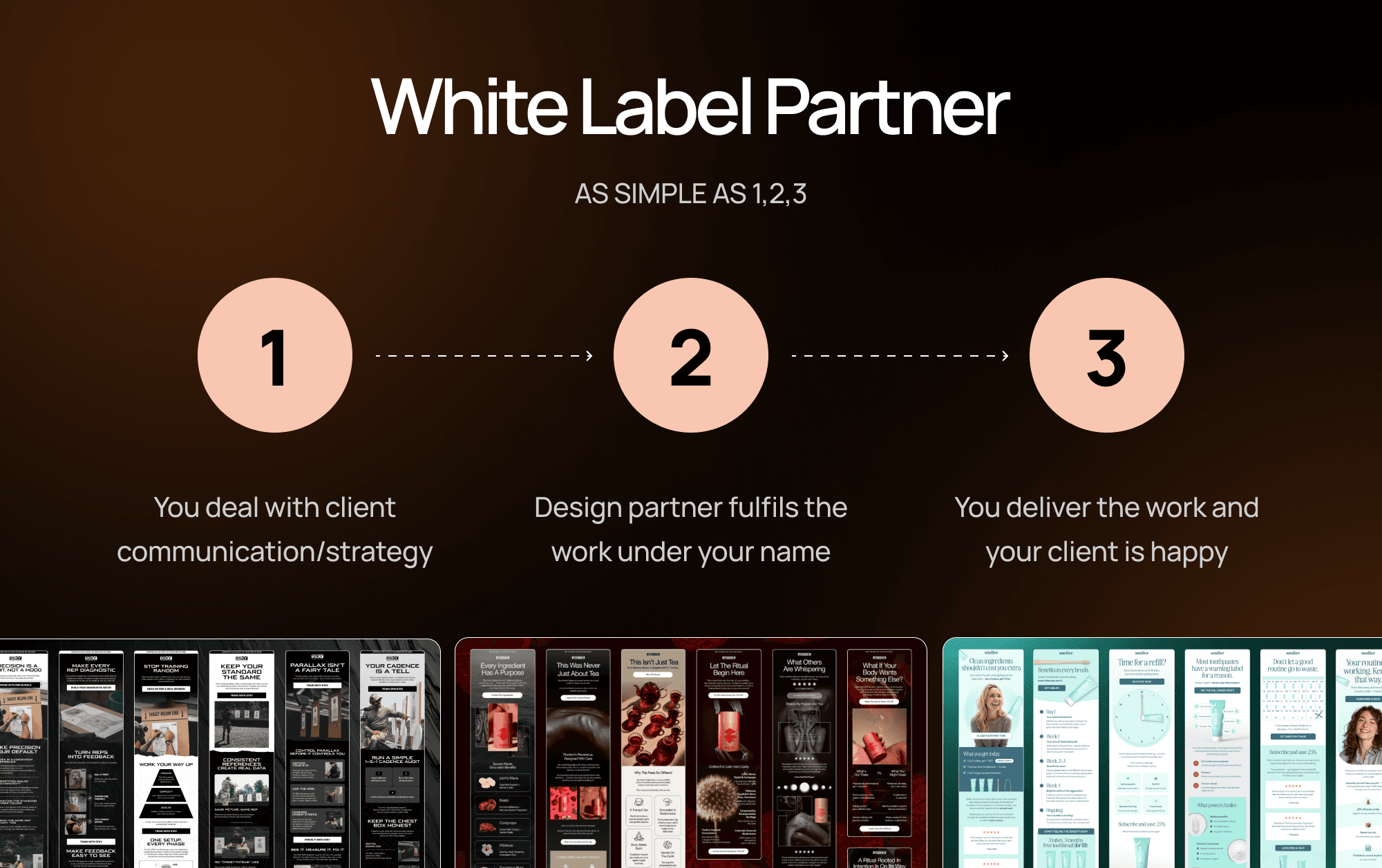
If design capacity is what slows down your onboarding, see how white-label email design for agencies works with Marz. Most agencies are live in their own Slack channel within 24 hours of signing up, and your clients never know we're involved.
Keep reading
Once they're onboarded, keep things moving with a better design workflow for your agency.
Onboarding faster with a design partner? Read our complete guide to white-label email design.
Before the first designs go to the client, run through our pre-delivery email design checklist.
Liked it? Share it with your people.


Us Vs Them
Launch your creative to new realms — fast, reliable, and scalable
Large agencies spread thin often lack the focus and flexibility to bring your visions to life.
Cover some needs well, but struggle with skill gaps and aren’t easily scalable.
Finding the right freelancer can be awesome, until they reach capacity or you suddenly get ghosted.
More Blogs
Marz Media is a specialized design partner for agencies that need consistent output without capacity issues.

Oct 7, 2026
Why Your Welcome Flow Deserves Better Email Design
Design a welcome flow that makes a strong first impression. Learn how better email design can improve brand consistency, guide conversions, and build long-term subscriber engagement.
READ MORE

Oct 7, 2026
Why Do Your Emails Still Miss the Mark If the Brief Was Good?
Discover why clear email design briefs may miss the mark and how aligning strategy, CTA hierarchy, and technical specs leads to stronger first-draft designs.
READ MORE
Mar 3, 2026
White Label Email Design: The Complete Guide for Ecom Agencies
Complete guide to white label email design for ecom agencies: how it works, why agencies outsource, how to choose a partner and the mistakes to avoid.
READ MORE