An email marketing agency spends days refining a campaign strategy, mapping customer journeys, and finalizing conversion-focused copy. The strategy is airtight, the client is aligned, and every requirement is compiled into a creative brief. Then the first draft comes back from the designer.
It looks polished, modern, and strictly follows the client's brand guidelines. Yet, somehow, it fails to achieve what the campaign actually needs to do. The primary call to action gets buried, the visual weight favors the wrong section, or the overall tone feels disconnected from the strategic goal.
The immediate reaction is often to blame the brief or assume the designer skipped reading it. But in an agency-to-agency setup, where an email marketing agency owns campaign strategy and hands off execution to an external email design partner, the problem is rarely a lack of information.
The real issue is alignment. A good email design brief can contain all the right data while still failing to communicate visual priorities.
Why a Good Brief Can Still Produce the Wrong Design
Most brief templates focus on inclusion: What is the goal? Who is the audience? What is the copy?
However, presenting raw data is not the same as establishing clear direction. When an email design brief treats every detail with equal importance, the email designer is forced to make assumptions about what matters most.
Objective vs. Visual Direction: A business goal like "drive revenue" or "reactivate lapsed subscribers" does not automatically translate into layout, contrast, or spatial structure.
Approved Copy Isn't Visual Hierarchy: Text that reads smoothly on a document does not inherently signal to a designer what the reader should notice, understand, and act on first.
Vague Brand Cues: Stating "keep it on-brand" provides hex codes and logo usage rules, but zero context on how this specific campaign should feel visually.
To eliminate friction and avoid endless revision rounds, the email design workflow must bridge the gap between campaign strategy and visual execution.
What an Email Design Brief Actually Needs to Communicate
Research from industry sources like Really Good Emails emphasizes that an email creative brief should serve as a strategic design roadmap rather than a rigid instruction sheet or a basic checklist.
To refine the email design handoff between your strategy team and your email design partner, your brief must explicitly detail these five core areas:
Campaign Context & Objective: Define where this email sits within the broader marketing funnel and what specific subscriber action equals success. The designer needs to know if the email is a cold promotional push, a post-purchase nurture, or a high-urgency announcement.
Primary Message & Message Hierarchy: Identify the single key takeaway the reader must grasp within two seconds of opening, followed by secondary details. Establishing what comes first, second, and third prevents the design from looking crowded or disorganized.
Primary CTA Strategy: Outline the main action, its visual priority, and how secondary CTAs should be styled. The brief must clarify the visual relationship between buttons so secondary links never steal attention from the primary conversion point.
Creative Direction & References: Detail the desired visual tone, specific brand cues to emphasize, and what style choices to avoid. If visual references are attached, the brief should explicitly state what element to look at, such as typography, spatial layout, or image treatment.
Technical Requirements & Constraints: Document target ESP constraints, modular template requirements, mobile responsiveness rules, and accessibility standards (such as color contrast and font scaling) before design begins.
Aligning Strategy with Visual Execution for Email Designing
1. Translating Campaign Goals into Visual Objectives
A campaign objective defines business outcomes; visual direction translates those outcomes into user behavior.
If the goal is product discovery, the layout requires balanced spatial grids, clear image framing, and scannable visual anchors. If the goal is an urgent flash sale, the design requires bold typographic hierarchy, high contrast, and immediate focus on the primary offer above the fold. Defining the visual problem gives the designer the clarity needed to build an effective solution.
2. Establishing Unmistakable Message Hierarchy
Email subscribers scan; they rarely read word-for-word. Strong conversion-focused email design uses visual hierarchy to guide subscribers from the main message to the action without making every element compete for attention. Research across email marketing standards (Salesforce, HubSpot) consistently shows that conversion rates rely heavily on scannability and structural clarity.
When handing off copy to an email design partner, structure the flow into three distinct levels:
The Hook (What to notice first): The hero image and primary headline that capture attention immediately.
The Context (What to understand next): Core benefit bullets or supporting body text that build interest.
The Action (What to do): The primary call to action positioned naturally along the visual scanning path.
Without an explicit structural flow, a designer might unintentionally give a secondary promotional banner the visual weight meant for your core message.
3. Designing Around the Primary Call to Action
Effective email CTA design goes far beyond button text. The designer must understand the visual hierarchy of every clickable element in the template. A thoughtful email design approach for agencies ensures that hierarchy, structure, and conversion goals work together from the start.
A single, high-contrast primary CTA supported by understated secondary text links consistently outperforms designs with competing primary buttons. The brief should make it clear which action takes priority so the layout guides the subscriber toward one primary goal.
4. Using Creative References Strategically
Attaching visual examples to an email design brief is helpful, but only when paired with specific commentary. Simply dropping a link into a document leaves room for misinterpretation.
Instead of attaching a sample email and asking the designer to "make it look like this," specify why the reference was chosen:
"Notice how the whitespace in this example separates product categories."
"Use the bold, condensed typography style shown in the hero section."
"Follow the subtle drop-shadow styling used on these product cards."
This level of precision ensures visual references serve as creative anchors rather than confusing distractions.
5. Account for Technical Constraints Early
Email design operates under strict technical limitations that differ significantly from web design. Rendering differences across email clients (such as Outlook, Apple Mail, and Gmail), mobile screen variations, and dark mode adaptations can drastically alter a design's appearance.
According to agency workflow studies from Stripo, establishing technical constraints early, including template character limits, fallback fonts, modular structure, and accessibility guidelines, dramatically reduces late-stage revision rounds. When designers know the technical boundaries from day one, they can build layouts that look clean and render reliably across all devices.
Building a Stronger Agency-to-Designer Workflow
A detailed creative brief is not about micromanaging every pixel or restricting artistic freedom. It is about providing a clear strategic roadmap that enables your email design partner to solve the right visual problem.
By shifting your agency's brief from a basic collection of copy and links to a clear guide on visual hierarchy, message priorities, and technical constraints, you eliminate ambiguity early in the workflow.
The result is a smoother handoff process, fewer revision rounds, and email designs that hit both aesthetic standards and campaign performance goals on the very first draft.
Have the Strategy & Let Marz Handle the Design
A strong email campaign deserves a design partner who understands more than the brief.
If your email marketing agency already has the strategy, copy, and campaign direction in place, Marz can take it from there. We work with email and marketing agencies to turn campaign requirements into clear, conversion-focused email designs, without adding another layer of complexity to your workflow.
From visual hierarchy and CTA placement to brand consistency and technical requirements, we design with the strategy behind the email in mind.
You bring the brief. We’ll bring the design.
Explore Marz and see how we can support your agency.
Liked it? Share it with your people.


Us Vs Them
Launch your creative to new realms — fast, reliable, and scalable
Large agencies spread thin often lack the focus and flexibility to bring your visions to life.
Cover some needs well, but struggle with skill gaps and aren’t easily scalable.
Finding the right freelancer can be awesome, until they reach capacity or you suddenly get ghosted.
More Blogs
Marz Media is a specialized design partner for agencies that need consistent output without capacity issues.
Oct 7, 2026
Why Your Welcome Flow Deserves Better Email Design
Design a welcome flow that makes a strong first impression. Learn how better email design can improve brand consistency, guide conversions, and build long-term subscriber engagement.
READ MORE
Mar 3, 2026
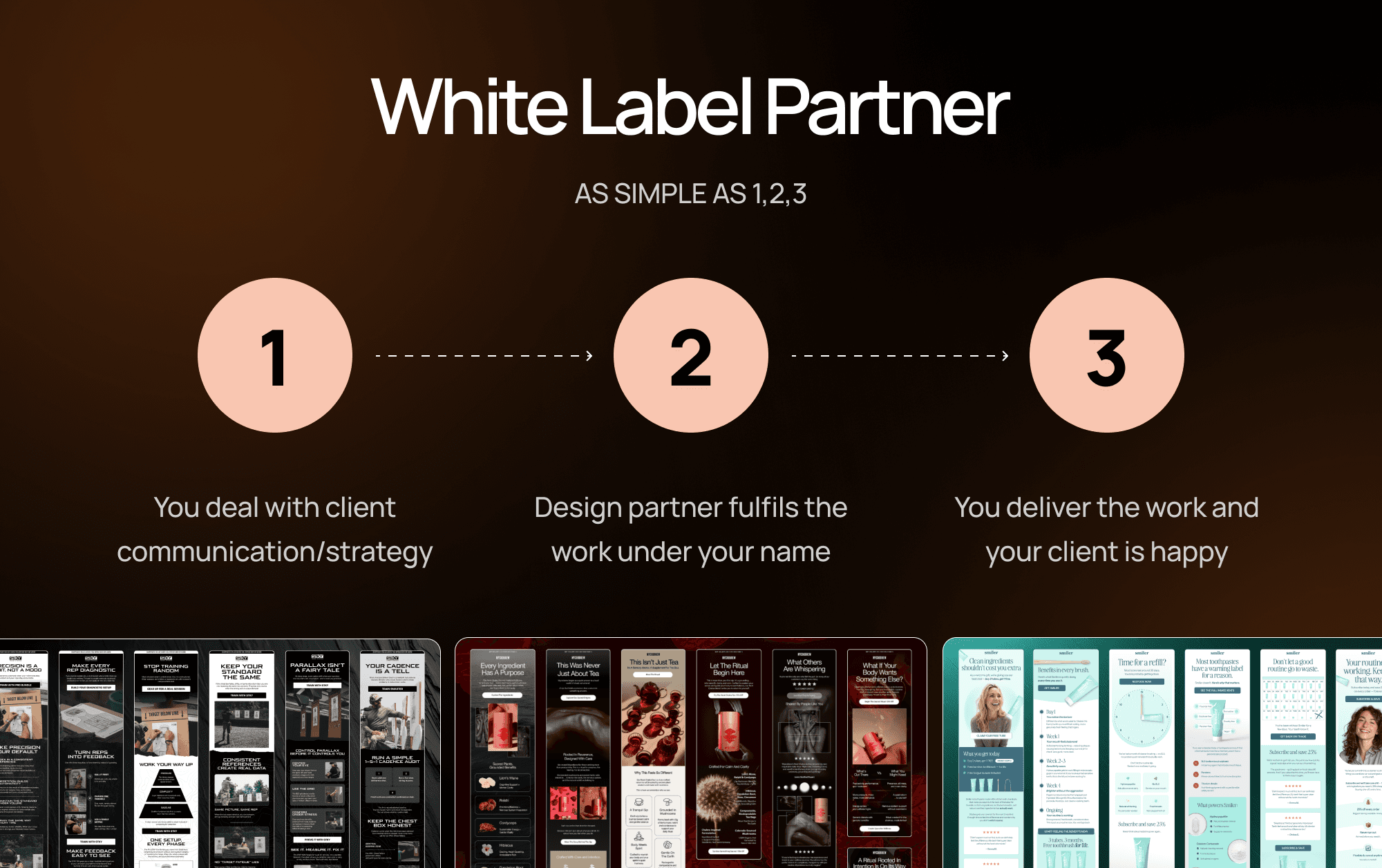
White Label Email Design: The Complete Guide for Ecom Agencies
Everything ecom email marketing agencies need to know about white label email design — what it is, how it works, and how to find the right partner.
READ MORE
Mar 13, 2026
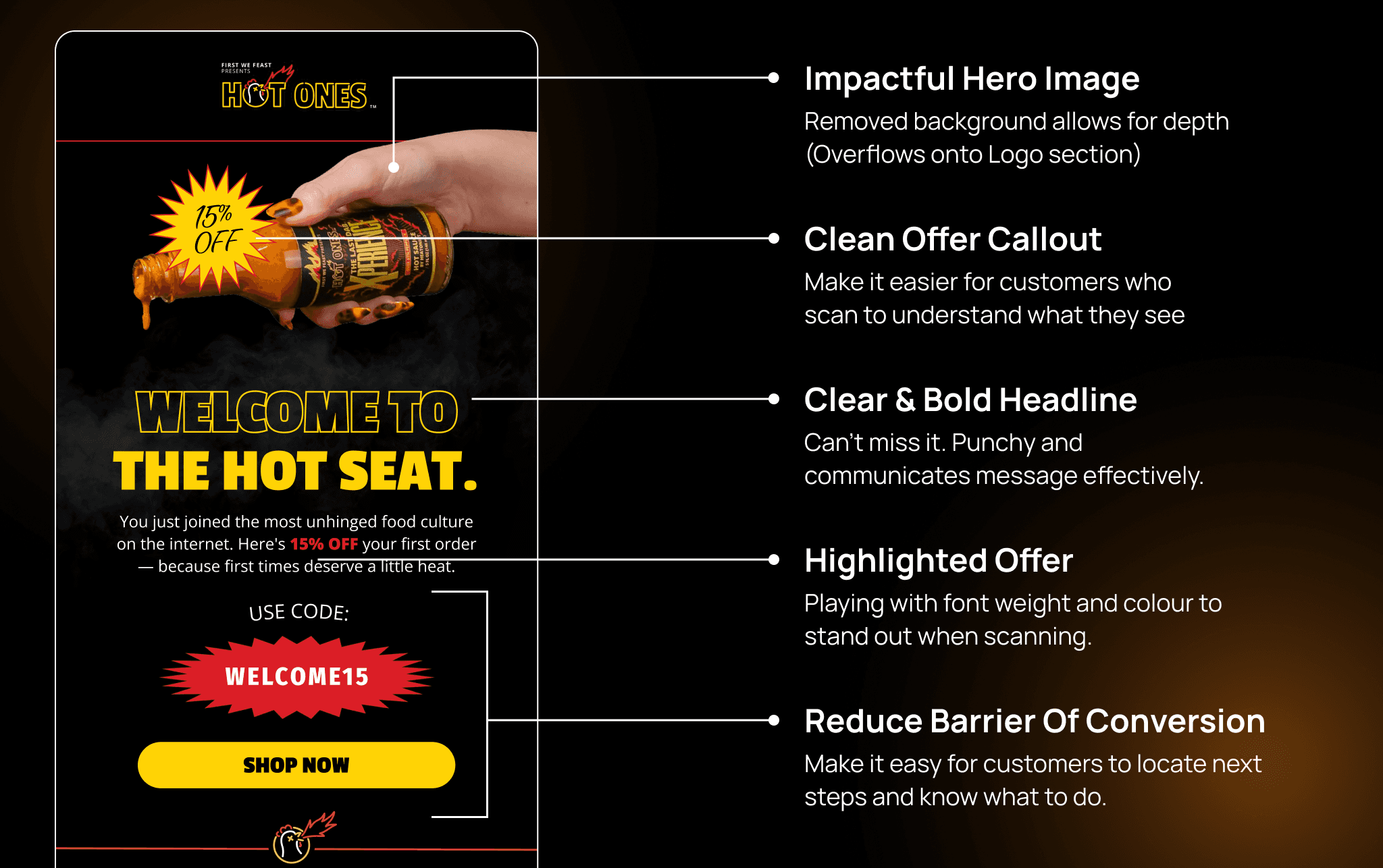
What Makes a High-Converting Ecom Email Design? And How to Brief One
A practical guide to high-converting ecom email design — covering layout, hierarchy, CTAs, mobile optimisation, and how to write a brief that gets results.
READ MORE