Email marketing is often considered one of the more reliable channels in digital marketing. Unlike social media algorithms that tend to fluctuate or paid advertising that requires continuous ad-spend scaling, email offers a direct line of communication with an audience that has opted in to receive updates.
From nurturing early-stage leads to retaining long-term customers, a well-structured email strategy can support multiple stages of the customer journey.
It often connects campaigns to objectives like website traffic, qualified leads, and direct sales, while providing an opportunity to test messaging and review performance based on available data.
What Makes Email Marketing Measurable?
One of the characteristics often associated with email marketing is its level of accountability. Campaigns typically leave a data trail that can help marketers observe some of the activity that occurs after an email is sent.
Interaction Tracking: It is often possible to monitor specific user actions, such as link clicks and unsubscribes.
Conversion Mapping: When integrated with analytics tools, campaigns may help track downstream actions like purchases and sign-ups.
Performance Comparisons: Marketers can often compare historical campaign data to observe trends over time.
Rather than relying entirely on guesswork, email marketing can provide data points that may assist marketing teams in making informed decisions.
The Email Marketing Metrics That Matter Most
To interpret campaign performance, it is often helpful to look beyond basic metrics and consider data that speaks to engagement and business impact.
Click-Through Rate (CTR): This metric generally reflects the proportion of recipients who engaged with links and calls-to-action within the email.
Conversion Rate: This can indicate the percentage of users who completed a desired target action after clicking through.
Revenue Per Campaign: This attempts to show the financial return linked to a campaign, provided that tracking systems are properly configured.
Unsubscribe Rate: This may serve as a helpful indicator regarding content relevance and audience alignment.
Open Rate: This is generally viewed as a high-level directional metric that often requires cautious interpretation due to privacy protections like Apple Mail Privacy Protection.
Understanding these metrics is only the first step. Knowing how design choices can influence the reader's experience is what helps agencies identify opportunities for improvement.
How Email Design Influences Campaign Performance
Data can help show what happened, while design may shape how the user experiences the message along the way. Email design is not always just about aesthetics; it can influence readability and user navigation.
Visual Hierarchy: This approach attempts to direct the recipient's eye naturally from the core message to supporting details, which may help highlight key information.
CTA Placement and Contrast: Designing clear calls-to-action can make primary actions easier to notice, potentially helping readers understand the next step.
Responsive Layouts: Ensuring layouts adapt to various screen sizes can make content easier to view across desktops, tablets, and mobile devices.
Brand Consistency: Maintaining a cohesive visual experience across touchpoints may help build familiarity over time.
Content and Design Alignment: Aligning the layout, copy, and call-to-action can help ensure they serve a unified campaign direction.
A consistent pre-delivery review can also help teams catch design issues before a campaign goes live.
Turning Email Marketing Engagement Into Meaningful Business Results
Data and design often need to work together. For instance, if an email campaign generates strong opens but low click-through rates, the issue might not stem from the visual aesthetic alone. It could point to other variables like offer clarity, content flow, or call-to-action placement.
Optimization often requires looking at the broader picture, including list hygiene, offer strength, copywriting, and landing page experience, rather than assuming visual adjustments will automatically solve every issue. Campaign performance can vary based on how these different elements interact.
The value of measurement lies in what teams do with the insights. For email marketing agencies, that means not only understanding where a campaign underperforms but also having the creative execution needed to test and refine the experience across future sends.
Why Email Marketing Agencies Might Need a Creative Design Partner
For growing email marketing agencies, bandwidth and specialization can sometimes become bottlenecks. An agency typically handles overarching strategy, audience insights, and campaign objectives, but translating those elements into visual assets often requires dedicated design execution.
Collaborating with a specialized creative partner can help agencies:
Maintain design consistency while managing multiple outbound campaigns.
Establish repeatable design systems that may reduce internal friction.
Allow core team members to focus more on client strategy, data analysis, and relationship management.
How Marz Media Supports Agencies With Scalable Email Design
Effective email design aims to be clear, purposeful, and adaptable to a growing agency's workload. At Marz, the goal is to function as an extension of your team by supporting design execution.
The focus is on helping translate campaign objectives into structured email experiences, aiming to complement your strategic expertise.
Explore how Marz supports email marketing agencies with creative email design.
Liked it? Share it with your people.


Us Vs Them
Launch your creative to new realms — fast, reliable, and scalable
Large agencies spread thin often lack the focus and flexibility to bring your visions to life.
Cover some needs well, but struggle with skill gaps and aren’t easily scalable.
Finding the right freelancer can be awesome, until they reach capacity or you suddenly get ghosted.
More Blogs
Marz Media is a specialized design partner for agencies that need consistent output without capacity issues.
Oct 7, 2026
Why Your Welcome Flow Deserves Better Email Design
Design a welcome flow that makes a strong first impression. Learn how better email design can improve brand consistency, guide conversions, and build long-term subscriber engagement.
READ MORE
Oct 7, 2026
Why Do Your Emails Still Miss the Mark If the Brief Was Good?
Discover why clear email design briefs may miss the mark and how aligning strategy, CTA hierarchy, and technical specs leads to stronger first-draft designs.
READ MORE
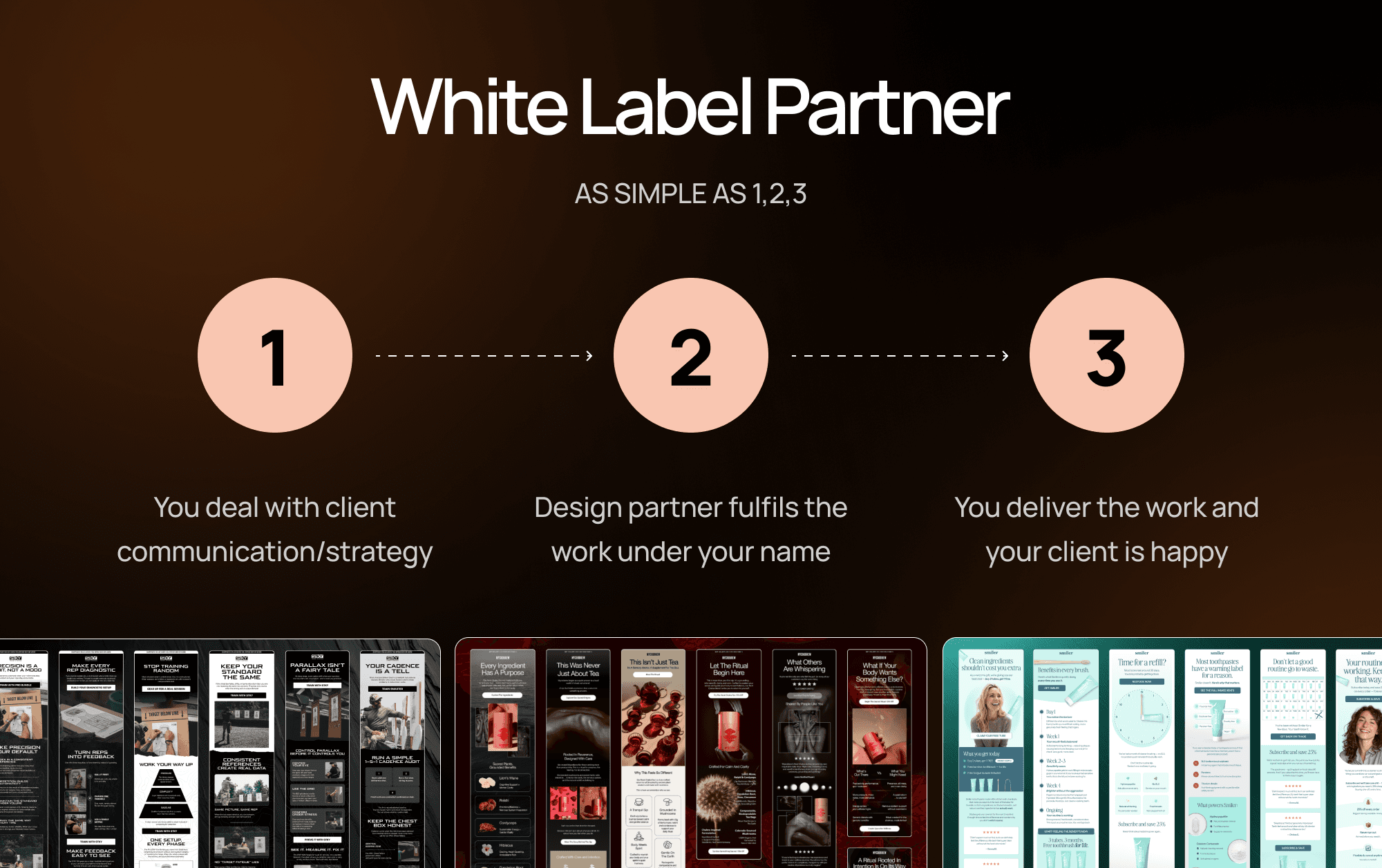
Mar 3, 2026
White Label Email Design: The Complete Guide for Ecom Agencies
Everything ecom email marketing agencies need to know about white label email design — what it is, how it works, and how to find the right partner.
READ MORE