Email design evolves rapidly. Every year brings a new wave of visual trends, workflow tools, and technical features, from AI-powered design tools to interactive, in-inbox experiences. But for email marketing agencies focused on delivering effective campaigns at scale, not every glossy innovation is worth adopting.
A new technology or design trend only becomes valuable when it solves a real problem, whether that means reducing production friction, improving the subscriber experience, making campaigns easier to scale, or helping teams work more efficiently. Otherwise, it can simply add complexity, extra QA, and more steps to an already demanding workflow.
At Marz Agency, we work with email marketing agencies to help turn evolving design ideas into practical, scalable email workflows. In this article, we’ll look at where email design is heading, which innovations are genuinely useful, and what agencies should consider before adding them to their stack.
Email Design Is Changing, But Not Every New Idea Is Better
The email design landscape is packed with novel design ideas and experimental code. However, a novel does not always mean effective. A new technology isn't automatically an innovation. In email, it's only valuable when it improves the subscriber experience, production workflow, scalability, or measurable performance.
An innovation is only valuable if it solves a genuine problem, such as speeding up campaign production, reducing rendering errors across email clients, or making it easier for subscribers to take action. Before adopting any new trend, agencies must evaluate whether it enhances performance or merely adds friction and QA bloat.
AI-Powered Email Design: Faster, But Not Automatically Better
AI email design tools have made giant leaps, enabling teams to generate initial visual concepts, generate color palettes, and draft wireframes in seconds.
Where AI Wins: Rapid prototyping, generating design variations for A/B testing, and speeding up repetitive asset creation.
Where AI Falls Short: AI tools struggle with nuanced brand guidelines, strict code compatibility across email clients (like legacy Outlook versions), and strategic UX that aligns with specific conversion goals. AI can still require human oversight for nuanced brand requirements, email-client compatibility, accessibility, and conversion-focused UX.
The Agency Takeaway: Treat AI as an assistant to accelerate draft phases, not a replacement for human design strategy and precision coding.
Figma-to-Email Workflows: Is the Handoff Finally Getting Easier?
Figma remains widely used for interface and email design because it makes collaboration, components, and visual iteration easier. New plugins and modern workflow integrations are making Figma-to-email handoffs smoother:
Component Libraries: Designing with reusable Figma components that map directly to coded HTML modules.
Automated Code Export Tools: Tools that translate layout layers into baseline HTML/CSS, reducing manual setup time.
Agile Collaboration: Enabling copywriters, designers, and developers to comment and revise within a single source of truth before a single line of code is finalized.
Modular Email Design: Build Once, Reuse Everywhere
If your agency is still designing and coding every client campaign from scratch, you may be spending valuable production time rebuilding elements that could be reused. Modular email design is one of the most profitable innovations agencies can implement.
By building a comprehensive master system of pre-tested, responsive modules (heroes, product grids, testimonials, CTA banners, and footers), you can:
Scale Production: Assemble new layouts faster without rebuilding every element from scratch.
Ensure QA Consistency: Every module is pre-tested across dark mode and mobile devices, eliminating repetitive bug fixing.
Maintain Visual Integrity: Clients get fresh layouts every campaign without deviating from their core design system.
Interactive Emails: When Does Interactivity Actually Add Value?
AMP for email and advanced CSS interactivity allow subscribers to complete actions, like browsing product carousels, completing surveys, or expanding accordion menus. Directly inside the inbox.
When to Use It: High-intent e-commerce campaigns, quick feedback collection, and interactive product showcases where eliminating a web page click directly improves conversion rates.
The Catch: Fallback support is required for email clients that do not support interactive code (e.g., Apple Mail or Outlook).
The Agency Takeaway: Interactivity should serve a functional purpose that reduces friction, not just exist as visual gimmickry.
Dynamic and Personalized Design for Email Campaigns
The future of email personalization goes far beyond dynamic text tags. Modern email design incorporates dynamic visual assets that adapt based on real-time subscriber data:
Behavior-Based Product Layouts: Automatically displaying product recommendations styled seamlessly into the email’s visual hierarchy.
Live Content Feeds: Dynamic countdown timers, live inventory updates, or location-based banner graphics loaded at the time of opening.
Contextual Imagery: Switching visual banners based on customer lifecycle stage or purchasing history.
Dark Mode, Accessibility, and Responsive Design Are Becoming Part of the Innovation
Designing for dark mode and digital accessibility is increasingly becoming baseline requirements for modern email design; it is a core benchmark of modern email design excellence.
Dark Mode Optimization: Using transparent PNGs, custom image borders, and test logos, images, backgrounds, and text colors across light and dark environments, using email-client-specific techniques where necessary.
Accessible Email UX: Implementing proper heading structure, high color contrast ratios, alt text for screen readers, and touch-friendly button padding
Fluid Responsiveness: Moving beyond basic stacking to custom mobile-first layouts that optimize visual hierarchy on smaller screens.
What Email Design Innovations Should Agencies Actually Adopt?
To keep your agency lean, profitable, and ahead of the competition, prioritize innovations that deliver measurable ROI.
For agencies looking to add scalable email design capacity, explore our Email Design for Agencies service:
Invest in Modular Systems: Build robust, reusable email design frameworks for every recurring client.
Refine Your Figma Handoff: Standardize your design-to-code workflow to eliminate QA bottlenecks.
Master Dark Mode & Accessibility: Build and test for more consistent rendering across major email clients and devices.
Deploy Interactivity Selectively: Use interactive elements where they measurably shorten the path to conversion.
The Best Innovation Is the One That Removes Friction for Email Design Agencies
At the end of the day, innovative email design isn't about chasing every passing trend. The best innovations remove friction from the workflow while making the experience easier for subscribers.
The right innovation should make your agency's workflow easier, not more complicated. Marz helps email marketing agencies add reliable design capacity, from ongoing campaign production to scalable email design systems.
Looking for a design partner for your agency? Let’s talk.
Liked it? Share it with your people.


Us Vs Them
Launch your creative to new realms — fast, reliable, and scalable
Large agencies spread thin often lack the focus and flexibility to bring your visions to life.
Cover some needs well, but struggle with skill gaps and aren’t easily scalable.
Finding the right freelancer can be awesome, until they reach capacity or you suddenly get ghosted.
More Blogs
Marz Media is a specialized design partner for agencies that need consistent output without capacity issues.
Oct 7, 2026
Why Your Welcome Flow Deserves Better Email Design
Design a welcome flow that makes a strong first impression. Learn how better email design can improve brand consistency, guide conversions, and build long-term subscriber engagement.
READ MORE
Oct 7, 2026
Why Do Your Emails Still Miss the Mark If the Brief Was Good?
Discover why clear email design briefs may miss the mark and how aligning strategy, CTA hierarchy, and technical specs leads to stronger first-draft designs.
READ MORE
Mar 3, 2026
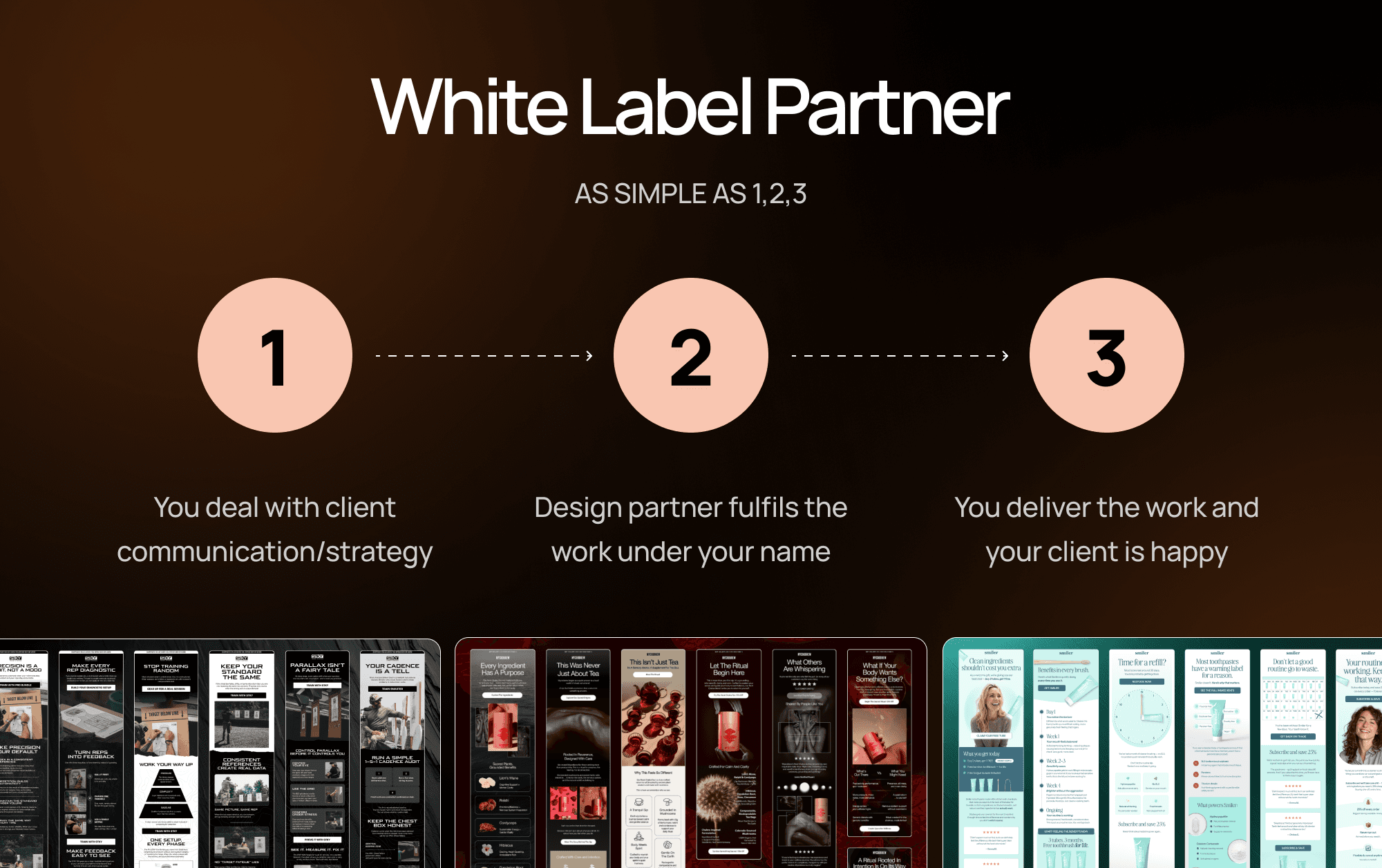
White Label Email Design: The Complete Guide for Ecom Agencies
Everything ecom email marketing agencies need to know about white label email design — what it is, how it works, and how to find the right partner.
READ MORE