
An email marketing agency runs the programme: strategy, segmentation, flows, campaigns, the Klaviyo build and reporting. An email design agency designs the emails themselves, so each one looks on-brand, reads well on a phone and is ready to build. Many retention agencies keep the programme in-house and work with an email design agency for the design layer.
So the question for your agency is rarely "which one?". It's who owns each step between the brief and the send, and whether design should sit inside your team or with a partner. This guide sets out what each type of agency does, how the handoff works, and when each setup fits.
What does an email design agency do?
An email design agency turns briefs into finished email designs. It's a specialist role, so the scope is narrower than a full-service agency's, and that focus is the point.
Typical scope for an email design agency:
Campaign designs: sale, launch, newsletter and seasonal emails, designed to the client's brand guide.
Flow designs: welcome, abandoned cart, browse abandonment, post-purchase and win-back emails.
Templates and modules: reusable headers, footers, product blocks and layouts, so later emails are faster to produce.
Mobile layouts: designs that work at phone width, with readable text and buttons that are easy to tap.
Revisions: changes after the agency's and the client's feedback, until the design is approved.
What a design agency usually doesn't do is decide the strategy, write the segmentation or own the results. Some design agencies also build emails in Klaviyo; others hand over design files for your team to build. Marz, for example, delivers approved designs in Figma, and the agency builds them in Klaviyo.
What does an email marketing agency do?
An email marketing agency owns the channel for its clients. It decides what gets sent, to whom and when, and it answers for the numbers.
Typical scope for an email marketing agency:
Strategy: the yearly plan, campaign calendar and offers, agreed with the brand.
Segmentation: who gets which message, based on behaviour and purchase data.
Flows and campaigns: planning the automations and the campaign schedule.
Copy: writing the emails, or briefing a copywriter.
Build and QA: building emails in the platform, testing them and scheduling sends.
Reporting: clicks, conversions, revenue and list health, reported back to the client.
Design often sits inside this list too, handled by an in-house designer or a freelancer. That's where capacity gets tight, because design is the step that grows fastest as an agency adds clients.
Email design agency vs email marketing agency: side by side
Here's how the two compare on the points that matter when you decide who does what. Read each pair as a split of responsibilities, not a ranking.
Main job: the design agency makes emails look right and read well; the marketing agency decides what to send and why.
Deliverables: design files and templates from the design agency; strategy, flows, built emails and reports from the marketing agency.
Who owns the client: the marketing agency. A white-label design agency works behind it, so the client relationship stays with you.
Who owns results: the marketing agency. Design supports clicks and conversions, but results also depend on the offer, the list and the timing.
Typical handoff: the marketing agency briefs, the design agency designs, the marketing agency builds and sends.
The overlap is design itself. If your agency already does design well and has the capacity, a design partner adds little. If design is the step everything waits on, it's the part worth handing over.
Why retention agencies partner with an email design agency
Retention agencies tend to look for a design partner when design becomes the step that limits how many clients they can take on, or how fast they can deliver for the ones they have. The same pressure builds as an agency moves up Klaviyo's partner tiers, since each tier asks for more managed revenue.
Common reasons agencies bring in an email design partner:
Design is the bottleneck: strategy and builds are ready, but emails wait in a designer's queue.
Peak seasons: Black Friday and launches multiply the design workload for a few weeks a year.
New clients: a new account needs welcome, cart and post-purchase flows designed quickly, on top of campaigns.
Brand range: each client needs its own look, and one designer can struggle to keep many brands distinct.
Reliability: freelancers who miss deadlines or disappear mid-project put client delivery at risk.
Two of our partners describe it in their own words on our white-label email design for agencies page. Jack, founder of Mail Mosaic, says design was the agency's only bottleneck. Jordan, founder of EFB, says the agency relies on Marz in peak periods. For a fuller look at the move, see our playbook for outsourcing email design.
How the handoff works: brief, design, build and QA
Partnering works when each step has one owner and a clear finish line. A common setup between a retention agency and a design partner looks like this:
Brief (agency): the client usually gives the objective, and the agency turns it into a brief with final copy, links, assets and the one job the email has to do. Our email design brief template covers the fields.
Design (design partner): the partner designs to the brief and the client's brand guide. At Marz, requests come in through the Marz app, first drafts arrive within 72 hours of a complete brief, and revisions come back the same day.
Review (agency and client): the agency checks the design against the brief, gathers client feedback and sends one consolidated round of changes.
Delivery (design partner): approved designs are delivered as editable files, such as Figma, ready for the build.
Build and QA (agency): the agency builds the email in Klaviyo, tests it across devices and inboxes, and schedules the send.
Day to day, the conversation happens in a shared Slack channel. Most Marz partners are live in theirs within 24 hours of signing up, so the first brief can go in the same week.
Where the handoff goes wrong
The weak point is usually between the approved design and the Klaviyo build. A design can look great as a static mockup and still not be fully build-ready. That shows up in a few ways:
Mobile gaps: the design only shows desktop, so the builder has to guess how sections stack on a phone.
Unclear specs: spacing, font sizes or image sizes aren't stated, so the build drifts from the design.
Build drift: the final Klaviyo email no longer matches the approved design, which leads to extra revisions.
The fix is to agree what "build-ready" means before the first design: mobile layouts included, specs stated, assets exported and named. Our pre-delivery email design checklist is a good place to start.
When to keep email design in-house instead
A design partner isn't the right call for every agency. Keeping design fully in-house makes sense when three things are true:
Steady volume: the design workload is predictable from month to month.
Budget: the agency can support a dedicated design team, including cover for holidays and sick days.
Control: the agency needs direct, day-to-day control over quality and priorities.
When demand goes up and down, or peaks around seasonal sales, a hybrid setup often works better: an in-house designer for core clients, with a design partner adding capacity when it's needed. Our comparison of freelancers, design agencies and in-house designers goes through each option in more detail.
Questions to ask an email design agency before you partner
If you decide to work with a design partner, these questions help you see how it will fit your workflow. Ask for the answers in writing.
Turnaround: how long first drafts and revisions take, and what counts as a complete brief.
Revisions: how many rounds are included, and how changes are requested.
File ownership: who owns the final designs.
File format: which editable source files you receive, in a format that fits your workflow, such as Figma.
Build-readiness: whether mobile layouts and specs come with every design.
White-label terms: how the partner stays invisible to your clients.
Continuity: what happens when a designer is away or a deadline is at risk.
Exit terms: how either side can end the arrangement, and what you keep.
Our guide to choosing a white-label email design partner covers the red flags to look for in the answers.
Email design agency vs email marketing agency FAQ
What does an email design agency do?
An email design agency designs campaign and flow emails to a brief and the brand's guidelines, including mobile layouts and reusable templates. Some also build in the email platform; others deliver design files for the marketing agency to build.
Do email marketing agencies design emails?
Many do, with an in-house designer or freelancers. Others focus on strategy, builds and reporting, and work with an email design agency for the design itself, especially when they manage many brands or have seasonal peaks.
Is it cheaper to outsource email design?
It depends on your volume. A full-time designer is a fixed cost whether the workload is high or low, while a design partner often charges per deliverable or per plan, so the cost follows the work. Compare the full cost of each option, including management time and cover for absences.
Can an email design agency build emails in Klaviyo?
Some do. Marz designs emails and delivers them in Figma, and the agency builds them in Klaviyo, which keeps the build, testing and sending with the team that owns the account. Agree who builds and who tests before the first email, so nothing falls between the two.
If design is the step your agency's email programme waits on, you can see how white-label email design works with Marz and book a call.
Keep reading
If you're weighing up the move, start with the signs your agency has outgrown its design setup.
For the white-label side in depth, read our complete guide to white-label email design.
For how a partner compares with a new hire, read Marz vs hiring a designer.
Once a partner is in place, onboarding a new email client in 24 hours gets new accounts moving fast.
Liked it? Share it with your people.


Us Vs Them
Launch your creative to new realms — fast, reliable, and scalable
Large agencies spread thin often lack the focus and flexibility to bring your visions to life.
Cover some needs well, but struggle with skill gaps and aren’t easily scalable.
Finding the right freelancer can be awesome, until they reach capacity or you suddenly get ghosted.
More Blogs
Marz Media is a specialized design partner for agencies that need consistent output without capacity issues.

Oct 7, 2026
Why Your Welcome Flow Deserves Better Email Design
Design a welcome flow that makes a strong first impression. Learn how better email design can improve brand consistency, guide conversions, and build long-term subscriber engagement.
READ MORE

Oct 7, 2026
Why Do Your Emails Still Miss the Mark If the Brief Was Good?
Discover why clear email design briefs may miss the mark and how aligning strategy, CTA hierarchy, and technical specs leads to stronger first-draft designs.
READ MORE
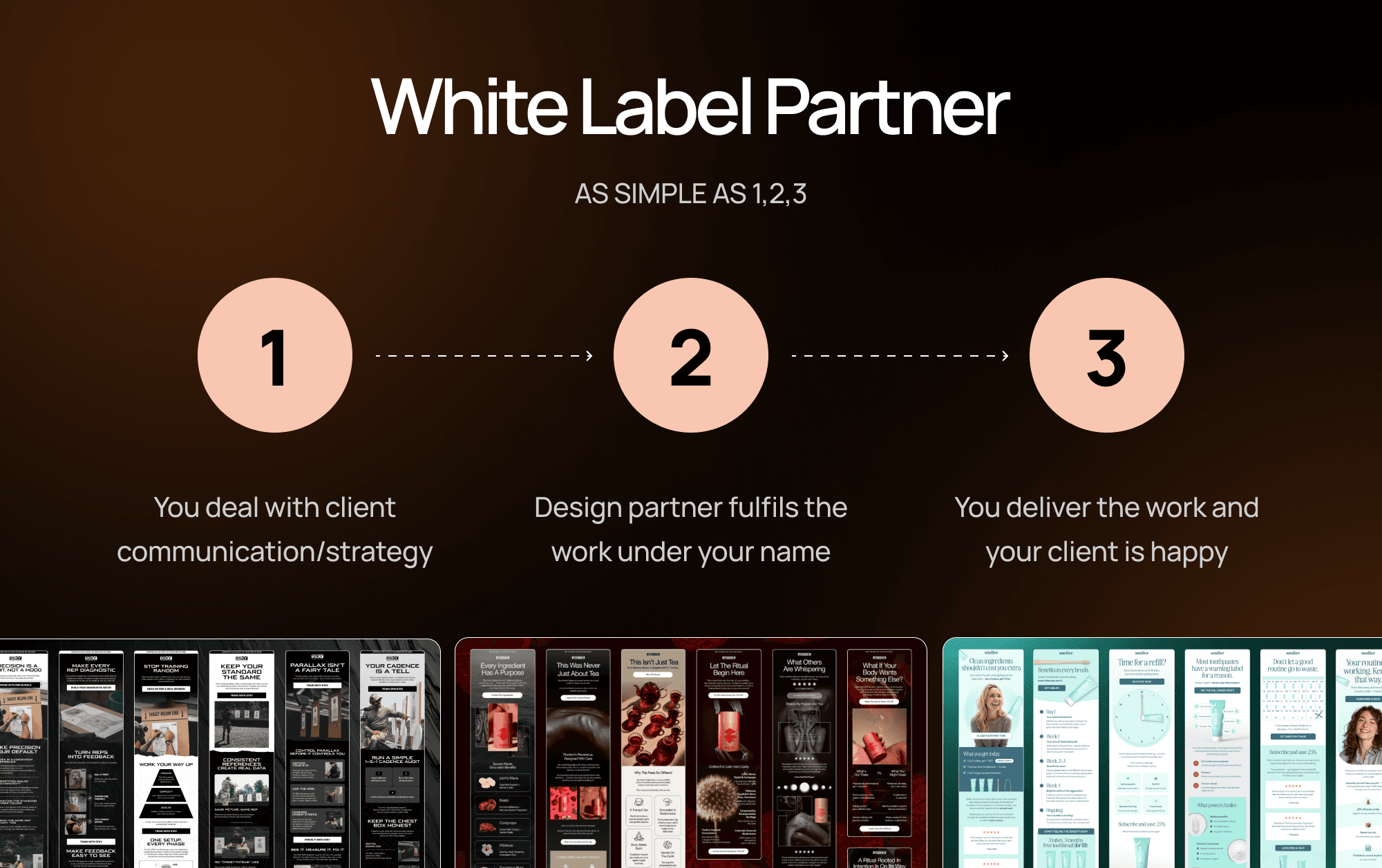
Mar 3, 2026
White Label Email Design: The Complete Guide for Ecom Agencies
Complete guide to white label email design for ecom agencies: how it works, why agencies outsource, how to choose a partner and the mistakes to avoid.
READ MORE